
Outpatient Anxiety Treatment Near You in NJ, PA, & NY
Anxiety affects most people at one time or another, and it often goes away without treatment. However, when anxiety is persistent and affects your daily life, structured support may be needed to get relief. At Rubicon Mental Health Center, we provide evidence-based outpatient anxiety treatment near you in Watchung, NJ. We serve individuals from New Jersey, Pennsylvania, and New York with compassionate care in a supportive and judgment-free environment. Learn more about anxiety disorders and our outpatient anxiety treatment that can help restore stability in your life.
Key Takeaways
- Anxiety is a normal human response, but when it is persistent, severe, or takes away from everyday life, it may be a mental health condition.
- There are many types of anxiety disorders, including generalized anxiety disorder (GAD), panic disorder, social anxiety disorder, and phobias.
- Diagnosing anxiety disorders requires a comprehensive clinical assessment to rule out other conditions and evaluate symptoms against common standards.
- Treatment for anxiety typically involves psychotherapy, medication, or a combination of both.
- Rubicon Mental Health Center provides whole-person, evidence-based outpatient anxiety treatment near you in Watchung, NJ.
What Is Anxiety?
Anxiety is a natural response to stress that leads to feelings of tension and worry, as well as physical changes like increased heart rate or sweating. Everyone experiences it sometimes. However, when someone deals with persistent and overwhelming anxiety that interferes with their functioning, they may have an anxiety disorder, a type of mental health disorder. There are several types of anxiety disorders, including:
- Generalized anxiety disorder (GAD): This type leads to chronic worry and tension about everyday events and activities, such as work, money, or relationships, even when there is no cause for concern.
- Panic disorder: This type is marked by sudden, recurrent panic attacks, which are intense feelings of terror and physical discomfort that last for a few minutes.
- Social anxiety disorder: This type causes severe fear and self-consciousness of being watched, judged, or humiliated in everyday social situations, often leading to avoidance behaviors.
- Phobias: These refer to major anxiety that is triggered by a certain object or situation, such as heights, flying, or spiders, causing the person to actively avoid their trigger.
Most anxiety disorders have overlapping symptoms, including constant dread, feelings of panic or impending doom, irritability, intrusive thoughts, avoidance, restlessness, and poor concentration. Physical symptoms include a racing or pounding heart, shortness of breath, tense muscles, shaking, nausea, and excessive sweating. These symptoms often interfere with everyday life and may require professional treatment to subside.
What Are the Causes and Risk Factors of Anxiety?
Anxiety disorders aren’t caused by a single factor. Instead, they result from a complex mix of genetic, biological, environmental, and psychological factors. These factors can increase a person’s risk of developing an anxiety disorder. They include:
- Genetics: Anxiety disorders often run in families, with people who have a family history of anxiety at a greater risk of developing it themselves.
- Brain chemistry: The development of anxiety has been linked to imbalances in neurotransmitters that control mood.
- Trauma: Experiencing or witnessing traumatic events, including violence, abuse, or severe accidents, can trigger the development of anxiety.
- Stress: Prolonged stress, caused by things like a toxic relationship or workplace, can change the brain’s chemistry and result in anxiety.
- Substance use: Misusing drugs or alcohol or withdrawing from them can cause or worsen anxiety.
Certain medications, early life circumstances, and personality traits, such as shyness or low self-esteem, can also increase a person’s vulnerability to anxiety.
How Is Anxiety Diagnosed?
Anxiety, like many other mental health conditions, doesn’t have a definitive diagnostic test. Instead, a mental health professional or primary care doctor will perform a clinical assessment to determine if your symptoms meet the criteria of an anxiety disorder diagnosis. The diagnostic process typically includes:
- Initial consultation: This involves a discussion of your medical history and symptoms, including what triggers them and how they affect your everyday life.
- Testing for other medical causes: Since physical issues, such as an overactive thyroid or heart conditions, can present like anxiety, your provider may perform a physical exam and order lab tests to rule out other potential causes.
- Clinical evaluation: After other medical causes are ruled out, a mental health professional will compare your symptoms against the standards listed in the Diagnostic and Statistical Manual of Mental Disorders, 5th Edition (DSM-5). They may ask you to fill out a psychological questionnaire, such as the Beck Anxiety Inventory or the Generalized Anxiety Disorder-7, to further assess your symptoms and their effects.
With this information, providers can confirm or rule out an anxiety disorder diagnosis. Patients typically must experience symptoms for a period of at least six months.
Outpatient Anxiety Treatment at Rubicon Mental Health Center
At Rubicon Mental Health Center, we specialize in providing outpatient mental health treatment for anxiety disorders, as well as other mental health disorders like depression, obsessive-compulsive disorder (OCD), and bipolar disorder. Through our three levels of care, we provide whole-person, evidence-based care that is rooted in a threefold model that addresses physical, mental, and spiritual health. Our program options include:
- Partial Hospitalization Program (PHP): This program runs for six hours a day, five days per week. It typically lasts 30 to 45 days.
- Intensive Outpatient Program (IOP): This program runs for three hours a day, with patients attending three to five days per week. It typically lasts for 10 to 12 weeks.
- Outpatient Program: This program runs for one hour a day, two to three days a week. The program length varies, but it generally lasts for several months.
In each of our outpatient programs, we develop personalized anxiety treatment plans for each patient, which may include talk therapy, medication management, and other services like family counseling or co-occurring disorder treatment. Our programs are run by master’s-level mental health professionals, including clinicians, therapists, case workers, and psychiatric advanced practice nurses (APNs). Each member works hard to create a safe, supportive space where patients can address their challenges and improve their quality of life.
What Therapy Modalities Are Used for Anxiety Treatment?
The most effective treatment for anxiety is typically a combination of psychotherapy and medication, often complemented by lifestyle changes. At Rubicon Mental Health Center, our outpatient anxiety programs utilize several different therapies and modalities to provide complete care. They include:
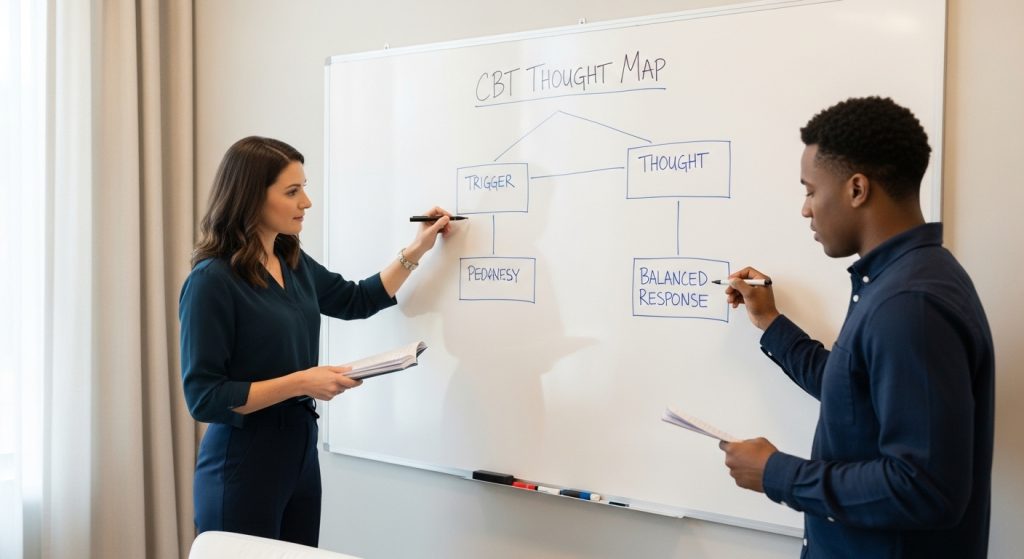
- Cognitive Behavioral Therapy (CBT): This is a type of talk therapy that helps patients recognize and modify negative thought patterns and behaviors that trigger anxious responses.
- Dialectical Behavior Therapy (DBT): This is a subset of CBT that is designed for intense emotions, such as anxiety and panic. It uses four pillars: mindfulness, distress tolerance, emotional regulation, and interpersonal effectiveness, to balance acceptance of your reality with change.
- Exposure therapy: This is another subtype of CBT that is used specifically for phobias, panic disorders, and OCD. It involves gradually exposing you to the trigger of your anxiety to help reduce your fear response over time.
- Acceptance and Commitment Therapy (ACT): This type of therapy concentrates on “psychological flexibility,” which helps people adjust to difficult experiences and make value-aligned choices.
We may use one or more of the above approaches, along with other methods like group therapy, family counseling, motivational interviewing (MI), and more, to help patients with anxiety stabilize their moods and restore balance in their lives.
Medication Management
We also provide medication management services when clinically appropriate. This involves prescribing the right medication, ensuring the right dosage, watching for side effects, and adjusting dosages as needed. Medications that are often used for anxiety treatment include antidepressants, such as selective serotonin reuptake inhibitors (SSRIs) and serotonin-norepinephrine reuptake inhibitors (SNRIs), and anti-anxiety drugs.
When Is Outpatient Anxiety Treatment the Right Fit?
Anxiety disorders are often treated in outpatient settings, especially through weekly therapy sessions. However, if weekly therapy isn’t enough, a more intensive form of outpatient therapy may be needed. Our outpatient programs at Rubicon Mental Health Center may be suitable for you if:
- You need more support than what weekly outpatient care provides
- You have mild-to-moderate symptoms that affect your daily life
- Can safely live independently
If you meet these criteria, outpatient anxiety treatment is likely ideal. With our three levels of outpatient care, we can meet patients where they are, whether they need intensive, daily support or sessions a few times a week.
Anxiety and Co-Occurring Conditions
A co-occurring condition is when a person experiences two or more mental health conditions, or a mental health condition and a substance use disorder (SUD), simultaneously. Most people with anxiety will deal with another mental health condition at some point, as brain chemistry imbalances and chronic stress can trigger multiple issues.
When a patient has anxiety and another diagnosis, whether it’s depression, OCD, or SUD, it requires integrated care to treat all aspects of each condition. At Rubicon Mental Health Center, we work with our sister center, Rubicon Recovery Center, to provide dual diagnosis treatment for individuals with co-occurring mental health and substance use disorders. Our team assesses each patient’s behavioral patterns, substance use, and other factors to help them achieve stability and improved mental health.
Insurance and Admissions
The cost of mental health treatment is often a barrier, but insurance coverage can help pay for some of the cost. Whether your insurance will cover outpatient anxiety treatment depends on factors like your provider, plan, and benefits. However, mental health conditions must be treated at the same level as physical health conditions under federal mental health parity laws. Therefore, most insurance plans cover mental health treatment at least partially.
At Rubicon Mental Health Center, we accept most major private insurance plans and offer patients an insurance verification process to help them understand their insurance, benefits, and potential out-of-pocket costs. Simply contact our Admissions Department at admissions@rubiconbhc.com to get started.
Find Outpatient Anxiety Treatment Near You in NJ, PA, & NY
Whether you’re dealing with a phobia, generalized anxiety disorder, or panic disorder, help is available at Rubicon Mental Health Center. We serve individuals from New Jersey, Pennsylvania, and New York with evidence-based care in a supportive environment. Here, wellness is just a phone call away, and we’re here for them 24/7. To learn more about our outpatient anxiety treatment near you in Watchung, NJ, call (908)-678-1870 or contact us online today.
FAQ About Anxiety Treatment
What are the types of anxiety disorders?
The types of anxiety disorders include:
- Generalized anxiety disorder (GAD), which causes chronic worrying about everyday events
- Panic disorder, which is characterized by sudden, recurrent panic attacks
- Social anxiety disorder, which results in severe fear and self-consciousness of being watched, judged, or humiliated in social situations
- Phobias, which refer to major anxiety that is related to a specific object or situation
What are the symptoms of anxiety disorder?
Common symptoms of anxiety disorder include:
- Constant dread
- Feelings of panic or impending doom
- Irritability
- Intrusive thoughts
- Avoidance
- Restlessness
- Poor concentration
Physical symptoms may include a racing or pounding heart, shortness of breath, tense muscles, shaking, nausea, and excessive sweating.
How is anxiety disorder diagnosed?
Anxiety is diagnosed through a comprehensive clinical evaluation that involves taking a medical history, ruling out other medical conditions with lab tests, and a symptom assessment using standardized criteria.
What treatments work best for anxiety?
The best treatments for anxiety are psychotherapy, such as cognitive behavioral therapy (CBT) and dialectical behavior therapy (DBT), medications, or a combination of both.
Can anxiety be treated on an outpatient basis?
Yes, anxiety can be treated effectively on an outpatient basis, and it’s often the standard treatment option for the condition.
Does Rubicon Mental Health Center offer dual diagnosis services?
Yes, we offer dual diagnosis care for patients with co-occurring mental health disorders or a mental health disorder and substance use disorder.
Does insurance usually cover outpatient anxiety treatment?
Whether outpatient anxiety treatment is covered by your insurance will vary based on your provider, plan, and benefits. However, federal mental health parity laws state that health insurance plans must treat mental health conditions at the same level as physical health conditions, so most insurance plans cover at least part of the cost of treatment.
What insurance providers does Rubicon Mental Health Center accept?
At Rubicon Mental Health Center, we accept most major private insurance plans, including Aetna, Anthem, Blue Cross Blue Shield, Cigna, and UnitedHealthcare.
Where is Rubicon Mental Health Center located?
We are located at:
40 Stirling Rd, Ste 212
Watchung, NJ 07069-5954
Our location is easily accessible via many major highways, including Interstate 78, Route 22, Interstate 287, Garden State Parkway, and Route 206.